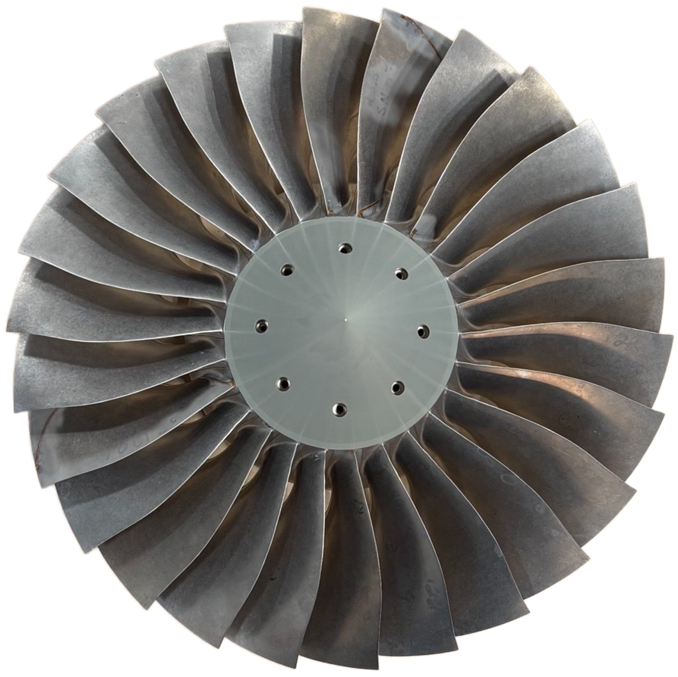
Transonic Fan Flutter: Effects of Inlet Distortion and Mistuning
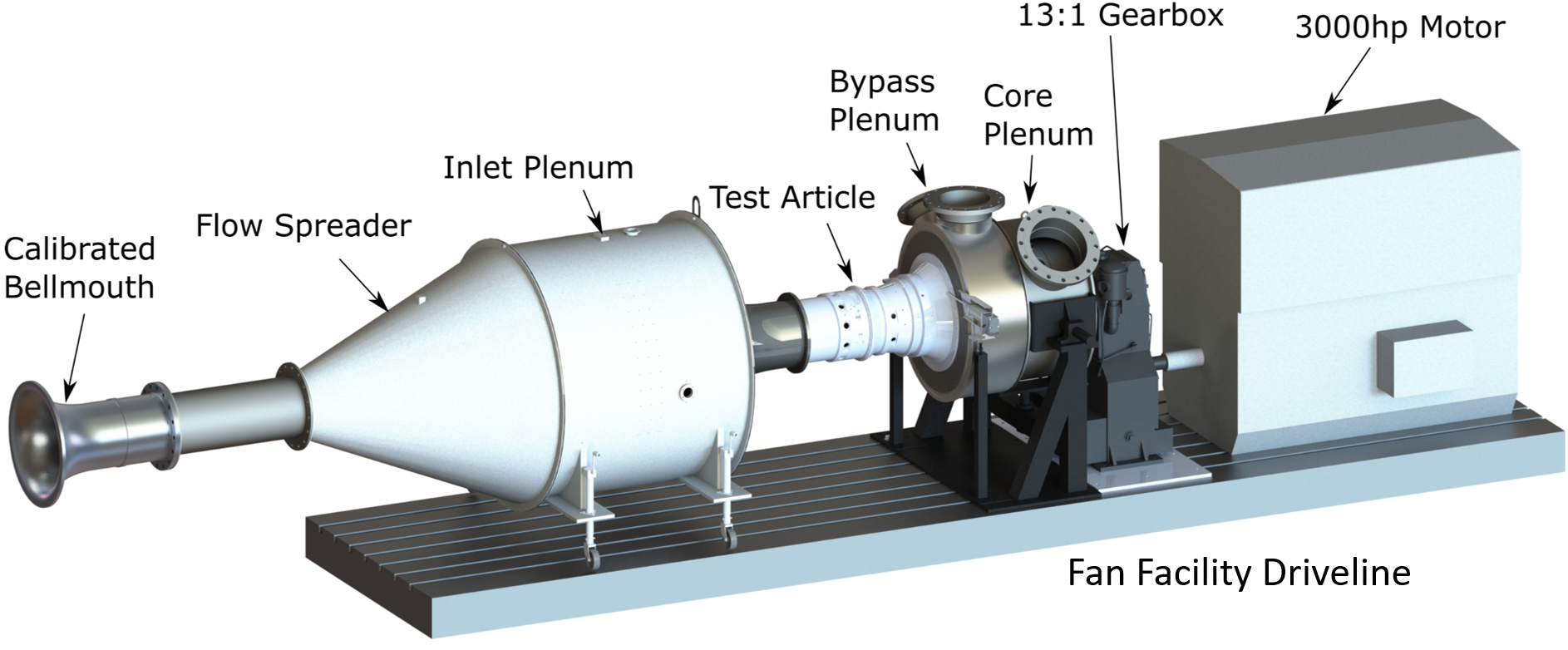
Purdue University’s Research Swept Fan (RSF) facility provides an engine-representative platform for investigating flutter, aerodynamic instability, and inlet distortion in modern turbofan engines. At approximately 19,000 rpm, it achieves a pressure ratio near 1.8 and a relative blade-tip Mach number near 1.5, with demonstrated part-speed flutter preceding stall. The facility’s modular design enables controlled variation of tip clearance, bypass ratio, inlet configuration, and blade mistuning. Extensive instrumentation combines performance rakes, radial traverses, fast-response pressure sensors, blade tip timing, strain gauges with telemetry, and real-time tip-clearance measurements, enabling simultaneous characterization of flow dynamics and blade vibration.
Building on these capabilities, Purdue’s GUIde 8 program will map stall and flutter boundaries and determine how tip clearance, bypass ratio, inlet distortion, and mistuning influence stability. A casing-mounted acoustic excitation array will be built and system identification methods to estimate system damping across operating conditions, providing a quantitative measure of flutter risk. A 360-degree rotatable inlet distortion module will be built and integrated to examine how total pressure, swirl, and combined distortions affect the stall margin, flutter boundaries, and low-engine-order forced response.
The project will deliver synchronized, high-quality aerodynamic and vibration datasets, improved understanding of instability mechanisms, and validation data for industry prediction tools. These outcomes will help engine manufacturers assess flutter risk and expand the operating envelope of efficient, lightweight fan designs